
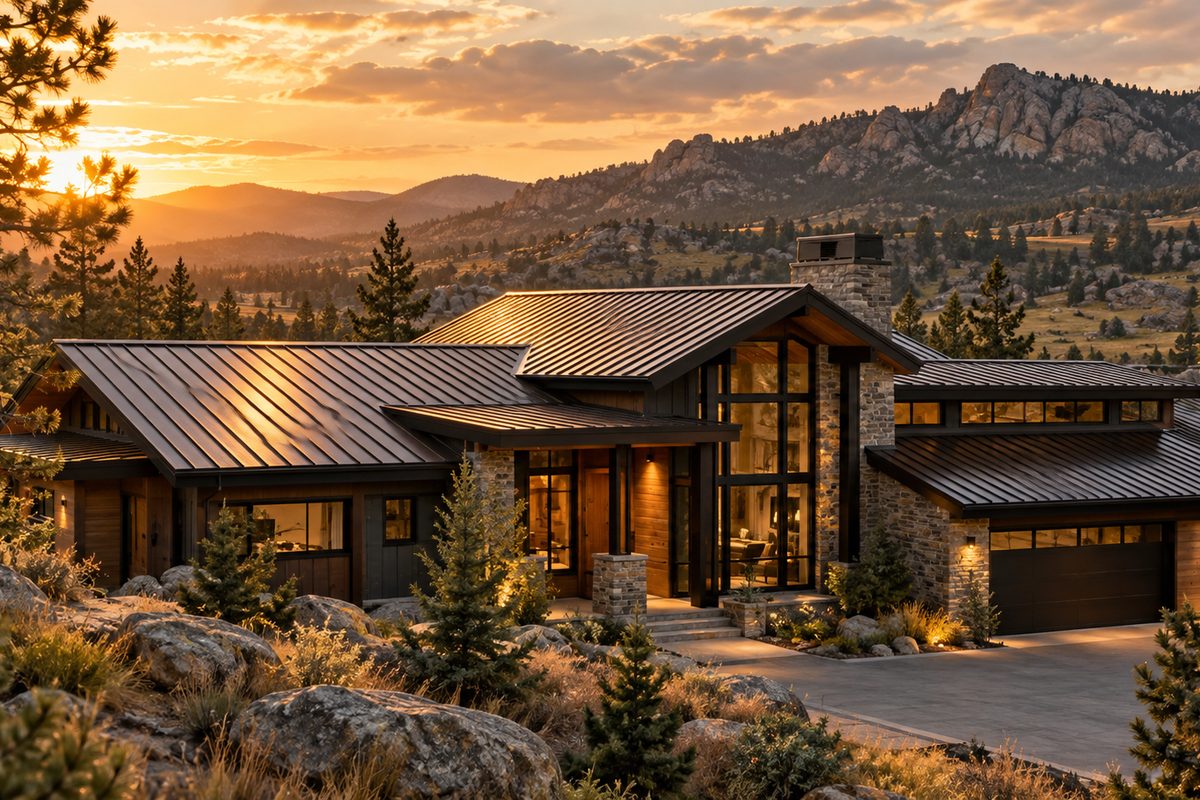
Why metal makes sense on the Front Range
Three things wear out roofs in Colorado: hail, sun and fire risk. Metal answers all three. Steel panels shrug off the hailstones that bruise shingles, factory-applied Kynar finishes don’t chalk and fade under our high-altitude UV the way asphalt granules do, and metal roofing carries the highest Class A fire rating, which matters more every year in the foothill communities.
Metal also sheds snow, which reduces ice dams on north-facing slopes, and it reflects summer heat instead of absorbing it, which lowers cooling loads in a house without central air.
Standing seam vs. stone-coated steel
Standing-seam roofing is the clean, modern look you see on mountain homes: vertical panels with raised seams and no exposed fasteners. It’s the longest-lasting option we install and the best choice for low-slope sections where shingles struggle.
Stone-coated steel panels are stamped to look like wood shake, slate or Spanish tile and finished with ceramic-coated stone granules. From the street they’re hard to tell from the real thing, at a fraction of the weight of tile and without the splitting and fire concerns of cedar shake. They’re a popular choice in neighborhoods with HOA appearance rules.
Installed by a metal crew
Metal roofing is a different trade from shingle roofing. Panel layout, seaming, flashing details at chimneys and dormers, and expansion allowances all have to be right, or a 50-year roof turns into a 10-year headache. Summit runs a dedicated metal crew with its own foreman and its own equipment, including an on-site roll former for standing-seam panels so every panel is cut to length with no splices.
Insurance and resale
Many Colorado insurers offer meaningful premium discounts for Class 4 metal roofs. And when it’s time to sell, a metal roof is one of the few exterior upgrades that appraisers and buyers consistently value.